



Finding a Laravel developer for hire is straightforward. Finding one who understands your product, your users, and your business goals takes more effort. This guide walks you through what to look for, what to avoid, and how to set up your project for a strong start.
Key Takeaways
Hiring a Laravel developer is about more than writing clean PHP. The projects that succeed pair solid engineering with product thinking, UX awareness, and long-term partnership. At Memory Squared, across the years, we've built multiple products relying on Laravel as a core technology - from startup products, up to enterprise-level platforms. You can find some of them in our portfolio, including:
- Flambia ERP for Meal Prep (automating order, production, and delivery workflows),
- Primate (a personalised food delivery e-commerce platform with subscription logic and recommendation engines),
We've even developed a government platform in Saudi Arabia (requiring audit trails, multilingual support, and strict compliance), where Laravel is well-represented in the government sector.
Each project needed a development team that could reason about business processes, not just execute tickets.
Laravel reduces development time while providing built-in security features, strong database management, and an architecture that scales. Built-in protection against cross-site request forgery, cross-site scripting, and SQL injection means fewer security surprises.
This article is for founders, product owners, CTOs, and enterprise decision-makers evaluating whether to hire a freelance Laravel developer, build an in-house team, or work with a Laravel development agency.
Memory Squared operates from Kraków, Poland, in the middle of the European Union, working with clients worldwide. We combine strong strategy and design experience with Laravel application development and a transparent process for delivery and collaboration.
If you already know you want to hire, a good starting point is to prepare a 1-2 page project brief covering business objectives, core user flows, integrations, timelines, and budget, then contact a Laravel development company to request proposals.
What Does a Laravel Developer Actually Do?
A Laravel developer is a PHP engineer who builds secure, scalable web applications, REST APIs, and back-office tools using the Laravel framework, a powerful PHP framework and server-side PHP framework following the MVC architectural pattern. Laravel development services include custom API and package development, database layer management, and integration of external services.
Core responsibilities break down like this:
- Architecting application structure using Laravel's MVC architecture for a clean code structure
- Building RESTful APIs (Laravel developers should have experience with building and consuming RESTful APIs)
- Integrating third-party APIs and services: payment gateways like Stripe, logistics providers, and email platforms
- Managing the data layer with Eloquent ORM, migrations, and seeders
- Implementing authentication, routing, and middleware
Modern Laravel developers also handle front-end work (Blade templating, Tailwind CSS, Vue or React via starter kits), DevOps tasks (CI/CD pipelines, Docker, Laravel Forge or Vapor), and automated testing with PHPUnit or Pest. Laravel supports seamless integration with third-party APIs and services, so integration expertise is non-negotiable.
A strong Laravel developer collaborates with designers, a project manager, and QA to shape the overall development process. At Memory Squared, our developers routinely move between complex ERPs, e-commerce platforms, and mobile apps' backends. Versatility across domain logic, integrations, security, and scaling concerns is the differentiator between a developer who takes tickets and one who shapes products.
Why Choose Laravel for Your Next Web Application?
Companies chose Laravel because of its maturity, ecosystem, and predictable release cycle. We observe that very often, one of the reasons is also some in-house familiarity with PHP - not necessarily with Laravel.
After more than a decade of community contributions, the Laravel ecosystem offers first-party packages for nearly every common web development need. The Laravel community remains one of the most active in web application development. The official Laravel application package has recorded more than 64 million installations on Packagist, while popular ecosystem packages such as Spatie's Laravel Query Builder have accumulated almost 35 million installations.
Here is what makes the Laravel framework the ideal framework for many projects:
- MVC architecture that improves scalability and maintenance, allowing Laravel's architecture to support easy upgrades and maintenance
- Built-in tools for routing, authentication, and caching, reducing repetitive setup
- Eloquent ORM that supports multiple databases and simplifies database interactions
- Queues and jobs for background processing (order emails, report generation, data syncs)
- First-party packages: Horizon for queue monitoring, Scout for search, Cashier for subscription billing, and newer starter kits for React, Vue, Svelte, and Livewire
Laravel allows for rapid development with pre-built modules and libraries. A typical subscription billing module can be delivered in weeks using Cashier instead of months of custom code. Laravel handles requests faster than most other frameworks, and its caching mechanisms ensure smooth performance under high traffic.
Security is a deciding factor, especially for finance, meal prep, and governmental platforms. Laravel protects against SQL injection and XSS attacks. It includes built-in CSRF protection for forms. It provides password hashing for secure user authentication using bcrypt or Argon2. Laravel's codebase is designed to minimize security threats, with rate limiting and middleware-based protections applied by default.
Laravel applications can scale as your business grows, and Laravel supports modular packaging to enhance scalability. With Laravel Cloud, managed deployment, and a thriving package ecosystem, long-term maintenance risk drops. Security fixes for Laravel provide a predictable support schedule, which is why many top Laravel development companies recommend it for projects that will run for years.
When You Should Hire a Laravel Developer (and When You Shouldn't)
Not every project needs a dedicated Laravel developer. A static landing page or a quick validation prototype can run on a no-code tool. But once your web development project involves roles, workflows, integrations, or compliance constraints, a simpler approach breaks down fast.
Laravel is widely used for building custom eCommerce platforms and CRM systems. Hire a Laravel developer when your project includes:
- Custom internal tools or ERPs (like Flambia's production and delivery workflows)
- E-commerce with business logic beyond Shopify templates (subscriptions, recommendation engines, dynamic pricing)
- SaaS applications with multi-tenant models and role-based access
- High-traffic content platforms with advanced features and heavy backend systems
If you foresee integrations with existing systems (legacy ERPs, CRM systems, payment gateways, logistics providers), bring on a Laravel developer early. Architecture decisions around data migration, API mapping, and error handling cost far more to fix later. Hiring a skilled Laravel developer requires a clear approach to vetting, and timing matters.
Freelancer, In-House, or Laravel Development Agency?
Choosing between a freelance Laravel developer, an in-house team, or a leading Laravel development agency depends on your project complexity, budget, and risk tolerance.
You can read more about the general approach to deciding between in-house and outsourcing in our other article.
Freelance Laravel developers work well for small, clearly scoped projects or proofs-of-concept. Lower initial cost and flexible engagement are the primary advantages. Experienced freelance Laravel developers’ rates on Upwork typically range from $30 to $100 per hour worldwide. The trade-off: limited bandwidth, no built-in product, QA or UX support, and project risk if the individual becomes unavailable. Effective communication skills are essential for remote Laravel developers, whether freelance or agency-based.
In-house Laravel developers offer full alignment with company culture and direct availability. But fixed costs add up. Hiring full-time in the US or UK often means a similar hourly rate to an experienced freelancer, but comes with full-time obligation, and operational employer overhead (taxes, gear, benefits) adds 20-35% on top.
A Laravel development agency provides access to a multidisciplinary development team: UX designers, backend and front-end engineers, QA, and DevOps. Risk spreads across the team; continuity holds even when individual developers rotate. Many companies choose this path for ongoing support and faster ramp-up.
A hybrid approach also works: partner with an agency for initial architecture and MVP over 6-12 months, then transition feature development and Laravel maintenance to an in-house team. The agency can remain as an architectural advisor, handling Laravel migration and framework upgrades.
Core Skills to Look for in a Laravel Developer
Use this as a practical checklist for interviews, RFPs, or vendor calls when evaluating Laravel development experts or Laravel development companies.
Technical essentials:
- Deep understanding of Laravel's MVC structure, routing, and middleware
- Eloquent ORM expertise: relationships, scopes, mutators, casts (candidates should demonstrate proficiency in Eloquent ORM and database management)
- Queues, jobs, events, and listeners for background processing
- Testing and security practices are essential for a skilled Laravel developer; quality assurance includes unit, integration, and performance testing with PHPUnit or Pest
- A strong Laravel candidate should understand version control and CI/CD practices
- A proficient Laravel developer should be familiar with the Laravel ecosystem and its tools
Database management:
- Design of normalized schemas, migrations, indexing strategies
- Performance optimization techniques involve query indexing and caching strategies
- Experience with MySQL or PostgreSQL which are based on our experience the most popular databases used in Laravel tech stack
- Redis for caching and queue backends, maintaining data integrity across transactions
API and integration:
- Building RESTful APIs; authenticating via Laravel Sanctum or Passport
- Integrating payment gateways (Stripe, PayPal), logistics APIs, and marketing tools
- Laravel's Eloquent ORM simplifies database interactions and improves efficiency when mapping third-party tools and third-party applications to internal data models
Front-end basics:
- Blade templating, Tailwind CSS, Alpine.js
- A good Laravel developer should be comfortable integrating frontend frameworks like Vue or React, especially with Laravel's starter kits for building full stack apps
Non-technical:
- Product thinking and ability to reason about trade-offs
- Clear communication; ability to estimate and document decisions
- Comfort working alongside non-technical stakeholders to develop solutions aligned with business objectives
How a Laravel Development Agency Works (The Memory Squared Approach)
Memory Squared is a product-focused software company based in Kraków, Poland. Laravel is one of our core technologies; we pair it with strong UX and product thinking to deliver tailored solutions that serve real business operations.
Our typical Laravel development process follows these steps:
- Discovery workshops: understand business goals, user personas, workflows, and integrations
- Product and UX design: wireframes, prototypes in Figma, usability testing, iterating based on feedback
- Technical architecture: choose Laravel version, database, hosting strategy, module boundaries
- Iterative Laravel development: sprints delivering core flows first (auth, payment, key user features), with continuous integration and code reviews
- Testing and quality assurance: unit and feature tests, performance testing, manual QA, security audits when needed
- Deployment: CI/CD setup, monitoring, logging, alerting
- Ongoing support: bug fixes, dependency updates, new features, Laravel support for framework upgrades
We maintain close customer engagement through weekly demos, clear documentation, and asynchronous communication across time zones. We use AI thoughtfully for scaffolding, code reviews, and test generation, but code quality and maintainability remain the responsibility of experienced Laravel developers. We collaborate with both non-technical founders and CTOs who want a partner to share architectural responsibility.
Real-World Laravel Projects: What Good Development Looks Like
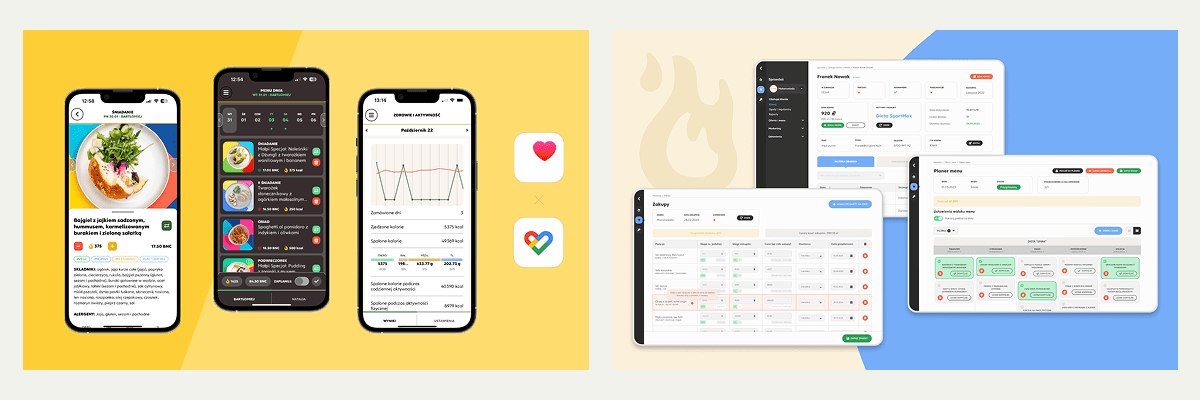
Three Memory Squared projects illustrate how hiring the right Laravel team translates into concrete outcomes.
Flambia ERP for Meal Prep manages orders, meal plans, production scheduling, and delivery routing. Multiple roles (admins, production managers, delivery personnel, customers) interact through role-based access control. Laravel supports role-based access control for user permissions, which was critical here. Background jobs handle scheduling and preparation workflows, and caching powers real-time dashboards. The result: fewer manual errors, better ingredient forecasting, and measurable reduction in weekly operational hours. This system automates repetitive tasks that previously consumed staff time.
Primate, a personalised food delivery e-commerce platform, combines subscription management with recommendation logic and secure payments. Laravel's queues process orders without blocking the storefront; caching keeps product listings fast during peak morning orders; events trigger order status updates. High quality services in web development mean the platform handles traffic spikes without degradati
on, driving customer engagement and business growth.
Governmental platform for a Saudi Arabia demanded high security: audit trails, field-level permissions, multilingual support, and compliance-driven architecture. Security best practices include preventing SQL injection and ensuring secure authentication, both of which were rigorously implemented. Laravel offers built-in protection against SQL injection and XSS, and data integrity was enforced through transactional workflows and rigorous testing across the entire platform.
These examples show the breadth of Laravel development: from internal ERPs to customer-facing apps and large-scale governmental systems.
Understanding the Laravel Development Process and Timelines
Here is what a realistic timeline looks like for a Laravel web application green-field product:
- Discovery - 1-3 weeks - Goals, user flows, integrations, constraints
- UX/UI Design - 3-8 weeks - Wireframes, prototypes, iteration
- Core Laravel Development - 8-20+ weeks - Depends on project complexity
- Testing and Stabilization - 2-4 weeks - Performance testing, security, bug fixes
- Deployment + Monitoring - Ongoing - CI/CD, logging, alerting
Scope, integrations, and non-functional requirements (performance, security, compliance) influence development time more than screen count. Implementing multi-tenant separation or GDPR compliance adds architecture and testing time that simple feature lists don't capture.
To shorten timelines: provide clear requirements, quick feedback cycles, access to subject-matter experts, and a single decision-maker. Starting with an MVP (core flows in 3-4 months) and planning two or three follow-up releases based on real customer engagement data reduces risk and keeps business growth on track.
Budgeting for a Laravel Developer or Laravel Development Agency
Cost depends on project complexity, required integrations, performance and security constraints, team composition, and timeline pressure. We at Memory Squared regularly do competition research, and based on it, we estimated the following high-level brackets.
Example budget tiers (2026 estimates):
- Small Laravel feature or module: $3,000-$15,000
- Mid-sized business application: $30,000-$100,000
- Large platform, ERP, or governmental app: $100,000-$250,000+
Engagement models:
- Time and materials: best for evolving products where scope shifts
- Fixed scope: for clearly defined deliverables with stable requirements
- Dedicated team: for ongoing development services and Laravel maintenance
- Flexible models: in some modern agencies, including Memory Squared, flexible goal-based models or licensing custom software are possible and worth discussing
A good RFP should contain: business objectives, primary user personas, example user journeys, known integrations, constraints (legal, performance, regulatory), target launch dates, budget range, and examples of products whose UX you admire. This helps Laravel development companies quote accurately and propose realistic timelines.
Questions to Ask Before You Hire a Laravel Developer
Use this as a checklist for interviews or vendor calls. Hiring a skilled Laravel developer requires a clear approach to vetting. A practical coding test is recommended to assess a candidate's Laravel skills alongside conversation.
Technical questions:
- Can you show recent Laravel projects similar to mine in domain and scope?
- How do you approach database management, migrations, and indexing over time? Key technical questions for vetting Laravel developers include database seeding and migrations.
- What is your testing strategy: unit, feature, end-to-end? Who is responsible for quality assurance?
- How do you prevent SQL injection, XSS, and CSRF vulnerabilities? Have you done security audits?
- Portfolio reviews should include contributions to open-source packages and custom deployments.
Process and communication questions:
- How often will we see demos? Who will be my main point of contact?
- How do you handle change requests during the development process?
- What tools do you use for performance monitoring and progress tracking?
Long-term support questions:
- What happens after launch? Do you offer Laravel maintenance and ongoing support?
- How do you manage framework upgrades (e.g., Laravel 10 to 12)?
- What is your approach to an existing Laravel application that needs modernization or Laravel migration?
Pay attention not only to technical answers but to how clearly the developer explains trade-offs. That clarity is a reliable signal of client satisfaction potential and long-term partnership fit.
How to Get Started: Next Steps to Hire a Laravel Developer
By this point you know whether Laravel fits your project and what kind of partner you need. Here is a concrete path forward.
- Clarify goals: define the problem you are solving and the outcomes you need - regardless of whether it is a bold product vision or a straightforward feature.
- Prepare a brief: create a one-page problem statement (what hurts today) and a one-page vision (what good looks like when the project is delivered), covering target users, key workflows, and customer relationships you want to build or improve.
- Gather references: collect examples of products whose UX or functionality you admire.
- Set constraints: define your timeline, budget range, and any regulatory or technical requirements.
- Don't rely heavily on AI in preparing technical details of the brief - focus on your requirements and business perspective, and define only those technicalities that you're sure about. It's the developer's role to come up with solutions.
- Contact shortlisted companies: common platforms for sourcing Laravel freelance developers include Upwork and Toptal, while LaraJobs is the official job board for finding Laravel engineers. When it comes to agencies, the best approach is to research them online and reach out directly.
Memory Squared typically starts with an initial call to understand your goals, a quick review of existing systems if applicable, an early rough estimate, and then a small paid discovery phase before full engagement. If you value design, UX, and solid engineering in your web development project, reach out to discuss your Laravel project.
FAQs on Laravel Developer for Hire
Is Laravel a good choice for a first MVP?
Laravel is often ideal for MVPs because it balances speed with a solid architecture that you will not have to throw away when the product grows. Laravel allows for rapid development with pre-built modules and libraries, and most of the codebase can be reused when moving from first launch to a scaled product. The key is to keep the scope tight rather than building every possible feature. Laravel's key features (routing, authentication, Eloquent ORM, and queues) give you a head start without accumulating the technical debt common in no-code hacks.
How often will my Laravel application need updates?
Security updates and minor version bumps should be applied every few months. Major Laravel upgrades happen roughly once per year (Laravel 12 released February 2025; Laravel 13 in March 2026). A good Laravel development agency plans upgrades so they are incremental and low-risk. Keeping the server PHP version current (8.2 to 8.3 to 8.4) is equally important. At Memory Squared, we include an upgrade and maintenance roadmap as part of long-term engagements. Laravel's caching mechanisms enhance application performance under high traffic, so performance tuning is part of ongoing maintenance alongside version updates.
Can Laravel handle high traffic and large databases?
Yes. Laravel applications handle high-traffic platforms and large datasets worldwide when the architecture is sound and database management is treated seriously from day one. Features like caching (Redis, Memcached), queues for non-blocking tasks, optimized queries with proper indexing, and horizontal scaling via containers allow Laravel apps to grow without rewrites. Laravel supports multiple databases with its Eloquent ORM, and its caching mechanisms ensure smooth performance. Examples like large e-commerce platforms and governmental portals confirm Laravel's suitability for demanding environments.
How does working with a remote Laravel team in Poland actually look?
Teams in Kraków share business hours with most of Europe and overlap with the UK and US mornings. Memory Squared runs scheduled sprint reviews, shares design and code in collaborative tools (Figma, Git platforms), and provides transparent progress tracking. Clear communication channels, weekly demos, and async updates keep everyone aligned. Many of our Laravel projects have been delivered for clients abroad, with long-term customer relationships built entirely remotely.
What should I prepare before contacting a Laravel development agency?
Prepare a concise description of the business problem, target users, and desired outcomes. Include any existing systems or third-party tools that need integrating, rough timelines (e.g., beta launch by June 2027), budget range, and examples of products whose UX or functionality you admire. Even a simple 1-2 page brief helps Laravel developers respond with more accurate proposals, timelines, and ideas from the first call. The better your brief, the faster you will drive business growth with the right partner.